

CEB Contributor
Kristin Schwaighart
at N/A
Kristin Schwaigart is a tax researcher and analyst at CEB, focusing on business, tax, employment, and estate planning. Ms Schwaigart graduated from UC Hastings College of Law and has worked in the legal publishing industry for 38 years.
CEB Region:
N/APractice Areas:
N/A-

SB 354 Would Provide a Modern Privacy Rights Framework for the California Insurance Industry
June 3, 2025
Kristin Schwaighart
Business Litigation, Insurance Coverage, Insurance Law, Privacy & Information Security, Types of Privacy Protections, Financial Data Privacy, Information Security Planning, Handling Internet and Electronic Data
On February 12, State Sen. Monique
Delaware Makes Major Changes to Its General Corporation Law Under Senate Bill 21
April 15, 2025
Kristin Schwaighart
Business Litigation, Business Torts , Breach of fiduciary duty
On March 25, Delaware Governor Matt Meyer signed into law Substitute 1 to Senate Bill 21 in an effort to stem the tide of announced redomestications to other states -- referred to as

Stipulation Not to Enforce Unconscionable Provision in Consumer Contract Doesn't Remedy the Contract, Second District Holds
February 25, 2025
Kristin Schwaighart
Business Litigation, Breach of Contract, Arbitration of Business Disputes, Business Transactions, Contract Law and Drafting Principles, Business Contract Provisions, Contract Dispute Resolution
In a decision published last month, California's Second District Court of Appeal
Ninth Circuit Upholds $134 Million Legal Resitution Award in CFPB Enforcement Action
January 14, 2025
Kristin Schwaighart
Business Litigation, Business Torts , Fraud and deceit, Business Transactions, Business Contract Provisions, Contract Remedies, Constitutional Law
Resolving a case that has spanned over a decade, a Ninth Circuit panel

California Expands Rosenthal Act to Cover Specified Commercial Debt Collections Starting July 1, 2025
December 3, 2024
Kristin Schwaighart
Bankruptcy, Business Litigation
On September 24, California Gov. Gavin Newsom signed

What's In California's Three New Laws Targeting Election-Related Deepfakes
October 8, 2024
Kristin Schwaighart
Business Litigation, Constitutional Law, Intellectual Property, Intellectual Property Infringement, Privacy & Information Security, Types of Privacy Protections, Internet and Electronic Privacy, State & Local Government
At San Francisco's Dreamforce conference on September 17, California Gov. Gavin Newsom signed three landmark proposals to crack down on election-related deepfakes ahead of the 2024 general election. The bills aim to strengthen protections against digitally altered media in political communications and advertisements. Although AB 2839 and AB 2655 don't explicitly mention artificial intelligence, the expanded use of AI deepfakes was a clear impetus for their enactment. Since 2019, when California and Texas pioneered the regulation of digitally altered media in the political arena, 17 other states have enacted similar laws to address AI-generated election communications.

White House Announces Government-Wide, Multi-Agency 'Time is Money' Initiative
August 20, 2024
Kristin Schwaighart
Administrative Law, Business Litigation, Business Transactions
On August 12, the Biden administration announced its new “Time is Money” government-wide, multi-agency initiative. In partnership primarily with the Federal Trade Commission (FTC), Department of Transportation (DOT), and the Consumer Fraud Protection Bureau (CFPB), the initiative proposes rules to make business processes easier for consumers to navigate, cracking down on all the ways that businesses, through excessive paperwork, hold times, and general aggravation, create hassles for consumers and degrade their quality of life. Attorneys representing business clients should carefully review the initiative to prepare for compliance with what's likely to become a long list of new federal regulations that will affect numerous sectors.

Courts Must Decide Whether Disputes Can Be Arbitrated When Only One of Two Contracts Requires Arbitration, SCOTUS Holds
July 2, 2024
Kristin Schwaighart
ADR, Business Litigation, Arbitration of Business Disputes, Business Transactions, Contract Law and Drafting Principles, Business Contract Provisions, Contract Dispute Resolution
In a recent opinion, the U.S. Supreme Court unanimously
FTC Issues Final Rule Banning Non-Compete Agreements After Sept. 4, 2024
May 14, 2024
Kristin Schwaighart
Business Litigation, Employment Law, Trade Secrets & Unfair Competition, Covenants Not to Compete
On April 23, the Federal Trade Commission voted
European Union Passes World’s First Comprehensive Artificial Intelligence Law
April 2, 2024
Kristin Schwaighart
Business Transactions, Privacy & Information Security, Information Security Planning, Handling Internet and Electronic Data
An overwhelming majority of the European Parliament approved the
CFPB Files Amicus Brief Urging First Circuit To Reverse Debt Collection Ruling
February 13, 2024
Kristin Schwaighart
Bankruptcy, Business Litigation
In November 2022, the District Court of Puerto Rico in

California Privacy Protection Agency Releases New Draft Regs on the CPRA and Automated Decision-Making Tech
December 28, 2023
Kristin Schwaighart
Employment Law, Privacy & Information Security
On December 1, in advance of its December 8 board meeting, the California Privacy Protection Agency (Agency) released more

EEOC Releases Proposed Enforcement Guidance on Workplace Harassment, Superseding Prior Guidance
November 6, 2023
Kristin Schwaighart
Employment Law, Discrimination & Harassment, Employee Handbooks & Policies
The U.S. Equal Employment Opportunity Commission (EEOC) has released its

Equal Employment Opportunity Commission Settles First-Ever AI Hiring Discrimination Lawsuit
September 18, 2023
Kristin Schwaighart
Employment Law, Discrimination & Harassment, Managing Risk in Hiring Employees, Avoiding Recruiting Liabilities, Privacy & Information Security
The Equal Employment Opportunity Commission (EEOC) has recorded its first settlement in a case involving an AI discrimination in hiring lawsuit. The $365,000 deal settles the EEOC's complaint against iTutorGroup, Inc. alleging age and gender discrimination.

California Supreme Court Unanimously Rules Against Uber in PAGA Case
August 7, 2023
Kristin Schwaighart
Business Litigation, Employment Law, Wage & Hour, Employee Misclassification, PAGA
In a recent ruling, the California Supreme Court unanimously

Understanding California's New 'Snitch' Rule for Reporting Attorney Misconduct
July 5, 2023
Kristin Schwaighart
Legal Ethics
On June 21, the California Supreme Court unanimously approved Rule 8.3 of the California Rules of Professional Conduct, effective August 1, 2023. With the adoption of this new professional misconduct reporting rule (the so-called "Snitch" Rule), California is the last state to adopt a mandatory reporting rule for lawyers.

NLRB Provides Guidance on Potential Remedies When Deciding Cases Involving Repeat Labor Law Violators
May 16, 2023
Kristin Schwaighart
Employment Law, Notice-Posting, Training & Recordkeeping Requirements
On April 20, 2023, the National Labor Relations Board (NLRB) provided detailed guidance on the broad, potential remedies that the NLRB will consider when deciding cases involving respondents who have shown a proclivity to violate the Act or who have engaged in egregious or widespread misconduct. (

Plaintiffs Retain Standing To Pursue Representative PAGA Claims in Court, Even If Individual Claims Sent to Arbitration
March 28, 2023
Kristin Schwaighart
Business Litigation, Arbitration of Business Disputes, Employment Law, Employee Handbooks & Policies
In a recent
FTC Proposes Rule Banning Non-Compete Clauses
February 14, 2023
Kristin Schwaighart
Business Litigation, Partnerships, Business Transactions, Employment Law, Covenants Not to Compete
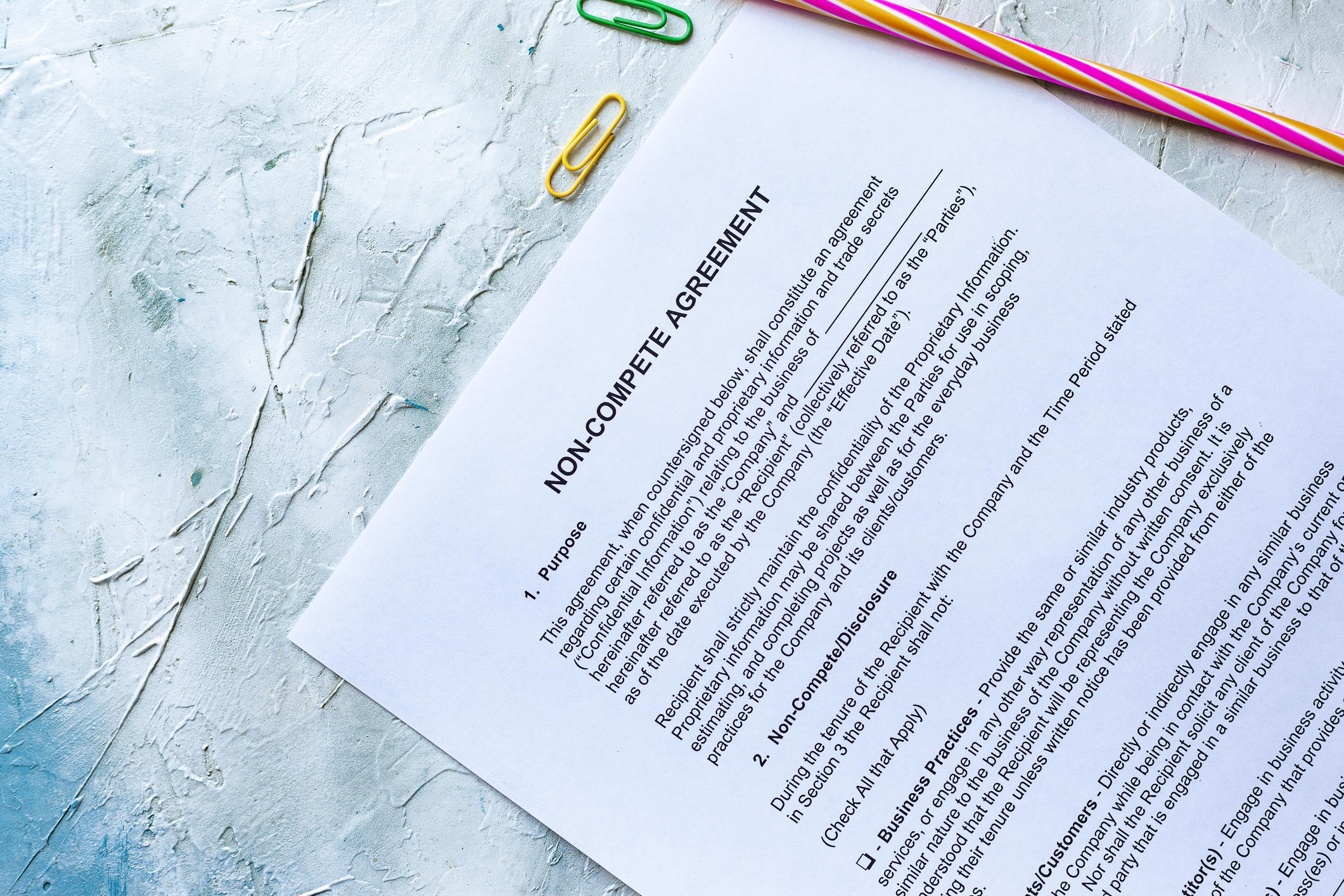
The Federal Trade Commission (FTC) estimates that about 20 percent of American workers—approximately 30 million people—are bound by a non-compete clause and thus restricted from pursuing better employment opportunities. A non-compete clause is a contractual term, typically between an employer and a worker, that blocks the worker from working for a competing employer or starting a competing business, usually within a specified geographic area and duration after the worker’s employment ends.

NLRB Limits Property Owners' Power to Block Union Section 7 Activity By Protesting Contractor Employees for Employers on the Property
January 3, 2023
Kristin Schwaighart
Business Litigation, Employment Law
On Dec. 16, 2022, in a 3-2 decision, the NLRB limited the rights of property owners to remove protesting contractor employees from their property. The opinion reinstates precedent that established a more worker-friendly standard for workers’ access to property owned by a third party. At issue was whether property owners may lawfully bar non-employees from accessing their property to engage in protected union activity (

Legal Resources for Veterans on Veterans Day
November 11, 2022
Kristin Schwaighart
Employment Law, Tax Law
In honor of Veterans Day 2022, the California Employment Development Department (EDD) has

CPPA Board Advances Modified Proposed CPRA Regulations
November 8, 2022
Kristin Schwaighart
Business Litigation, Privacy & Information Security
On Sept. 17, 2022, the California Privacy Protection Agency (CPPA) issued significantly modified proposed California Privacy Rights Act (CPRA) regulations as well as an explanation for the changes. On Oct. 28 and 29, 2022, the CPPA Board held a meeting to review and consider the modified proposed regulations. At the end of the meeting, the Board advanced these regulations. After the CPPA prepares and notices these modified proposed regulations, there will be a 15-day comment period. The Board aims to submit final regulations to the Office of Administrative Law by the end of the year. If on schedule, the regulations would take effect in late January or early February of 2023.

California Attorney General Has Announced the First Public Enforcement Action Under the CCPA
September 20, 2022
Kristin Schwaighart
Privacy & Information Security
On August 24, 2022, California Attorney General Bonta announced the first public enforcement action under the California Consumer Privacy Act (CCPA). This action is part of the Attorney General’s continuing efforts to enforce this comprehensive consumer privacy law that permits California consumers to require businesses to stop selling their personal information to third parties.

Eleventh Circuit Rules That Title VII's Anti-Retaliation Provision Protects All Employees, Including Managers
August 2, 2022
Kristin Schwaighart
Employment Law, Discrimination & Harassment, Retaliation & Whistleblower Issues, FEHA & Title VII Protections
The U.S. Court of Appeals for the Eleventh Circuit has ruled in a

California Privacy Protection Agency Issues First Set of Draft Regulations Under California Privacy Rights Act of 2020
June 14, 2022
Kristin Schwaighart
Privacy & Information Security
On May 27, 2022, the California Privacy Protection Agency (CPPA) issued a 66-page first set of

California AG’s Office Issues First-of-a-Kind Interpretive Opinion on CCPA Application
April 19, 2022
Kristin Schwaighart
Business Transactions, Privacy & Information Security
The California Legislature enacted the California Consumer Privacy Act of 2018 (CCPA) (Civ. Code, §§ 1798.100–1798.199) effective Jan. 1, 2020. The CCPA is the first stand-alone consumer privacy law in the country, followed more recently by laws in Virginia, Colorado, and Utah. The first round of amendments was enacted on Sept. 23, 2018. (See Stats. 2018, ch. 735.) On Oct. 11, 2019, five more bills amended the CCPA. (See Stats. 2019, chs. 748, 751, 757, 759, 763.) The CCPA directed the Attorney General to adopt regulations by July 1, 2020 and authorized the Attorney General to establish “any exceptions necessary to comply with state or federal law, including, but not limited to, those relating to trade secrets and intellectual property rights.” (Civ. Code, § 1798.185(a)(3).) The regulations became operative on Aug. 14, 2020; amendments to the regulations took effect on March 15, 2021. (Cal. Code Regs., tit. 11, §§ 999.300-999.337.)

NLRB Solicits Briefing on Legal Standard for Confidentiality Requirements in Mandatory Arbitration Agreements
March 1, 2022
Kristin Schwaighart
Employment Law
In a

The IRS Issues Further Guidance on the Paycheck Protection Program
March 8, 2021
Kristin Schwaighart
Tax Law, Trusts & Estates
The IRS issued guidance in 2020 on the deductibility of Paycheck Protection Program (PPP) expenses in 2020 in the form of Revenue Ruling 2020–27 and Revenue Procedure 2020–51, both published Dec. 7, 2020. The IRS reaffirmed its position that taxpayers may not deduct otherwise deductible expenses if the payment of the expenses results in forgiveness of a PPP loan, as the income associated with that forgiveness is excluded from income under the Coronavirus Aid, Relief, and Economic Security (CARES) Act. (Pub. L. 116–136, 134 Stat. 281.)
No documents found.
No programs found.
No secondary sources available.
Scroll to TopCopy the link below: