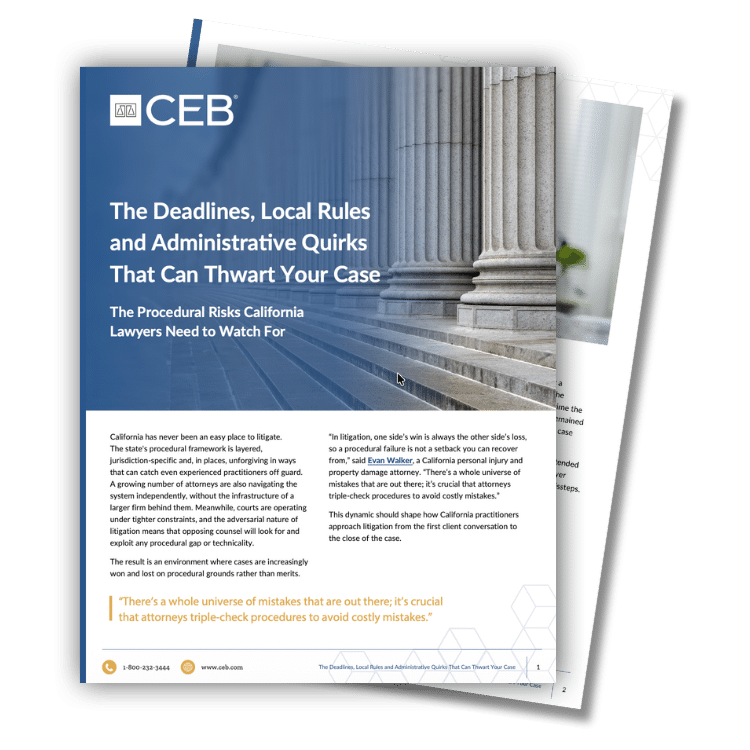

The Procedural Risks California Lawyers Need to Watch For
California’s procedural framework is layered, jurisdiction-specific and unforgiving in ways that can catch even experienced practitioners off guard. Courts are operating under tighter constraints, attorneys are increasingly navigating litigation independently, and opposing counsel are prepared to exploit procedural gaps and technical mistakes.
The result is an environment where cases are increasingly won and lost on procedural grounds rather than merits.
In this new white paper from CEB, explore some of the procedural risks California practitioners need to navigate carefully throughout the litigation lifecycle.

Topics Include
- Why statutes of limitation remain one of the most consequential and commonly mismanaged procedural risks
- Government Tort Claims Act filing requirements and shortened procedural timelines
- How local court rules, clerk practices and judge-specific expectations vary across California jurisdictions
- Administrative proceedings, exhaustion requirements and procedural sequencing
- Why procedural competence is inseparable from effective representation
The paper also examines how procedural assumptions can create exposure when moving between venues or practice areas, and why attorneys should approach litigation with structured procedural discipline from intake through resolution.
“There’s a whole universe of mistakes that are out there; it’s crucial that attorneys triple-check procedures to avoid costly mistakes.”