
Water Rights, AI Infrastructure and California Development
Water isn’t a new battleground in California.
Some of the state’s most consequential conflicts have begun with water. Today, as California confronts persistent drought conditions, tightening conservation mandates and competing demands on limited water supplies, water rights issues are increasingly intersecting with land use, development and emerging technology infrastructure.
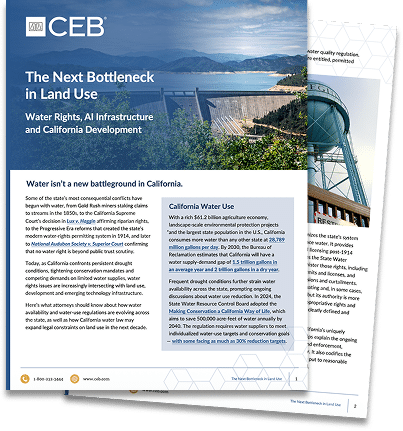
CEB’s latest white paper, The Next Bottleneck in Land Use: Water Rights, AI Infrastructure and California Development, examines how water availability and water-use regulations are evolving across the state, and how California water law may expand legal constraints on land use in the next decade.
Download the white paper to learn:
- How California’s constitutional, statutory and public trust obligations shape water use
- Why SGMA, Porter-Cologne, the Clean Water Act and CEQA matter in development strategy
- How AI and cloud computing infrastructure are increasing scrutiny of water-intensive projects
- Why water supply documentation, drought planning and conservation alignment are becoming more important in entitlement reviews
- What land use counsel should consider as local jurisdictions condition large-scale water use through permitting, pricing and infrastructure requirements

Why this matters now
California water law is poised to become a more central constraint on development, even outside traditional water rights adjudications.
As conservation mandates tighten and water agencies play a larger role in land use decisions, questions about water supply, reliability and use are becoming top of mind for both private entities and local communities.
For environmental land use attorneys, this means water issues can no longer be treated as a later-stage technical concern. They must be integrated into immediate legal strategy, entitlement planning and long-term risk analysis.
Get the white paper
Download The Next Bottleneck in Land Use: Water Rights, AI Infrastructure and California Development to understand the legal overlays and policy pressures shaping California development today.